26 September 2026
How do I help my child roll?
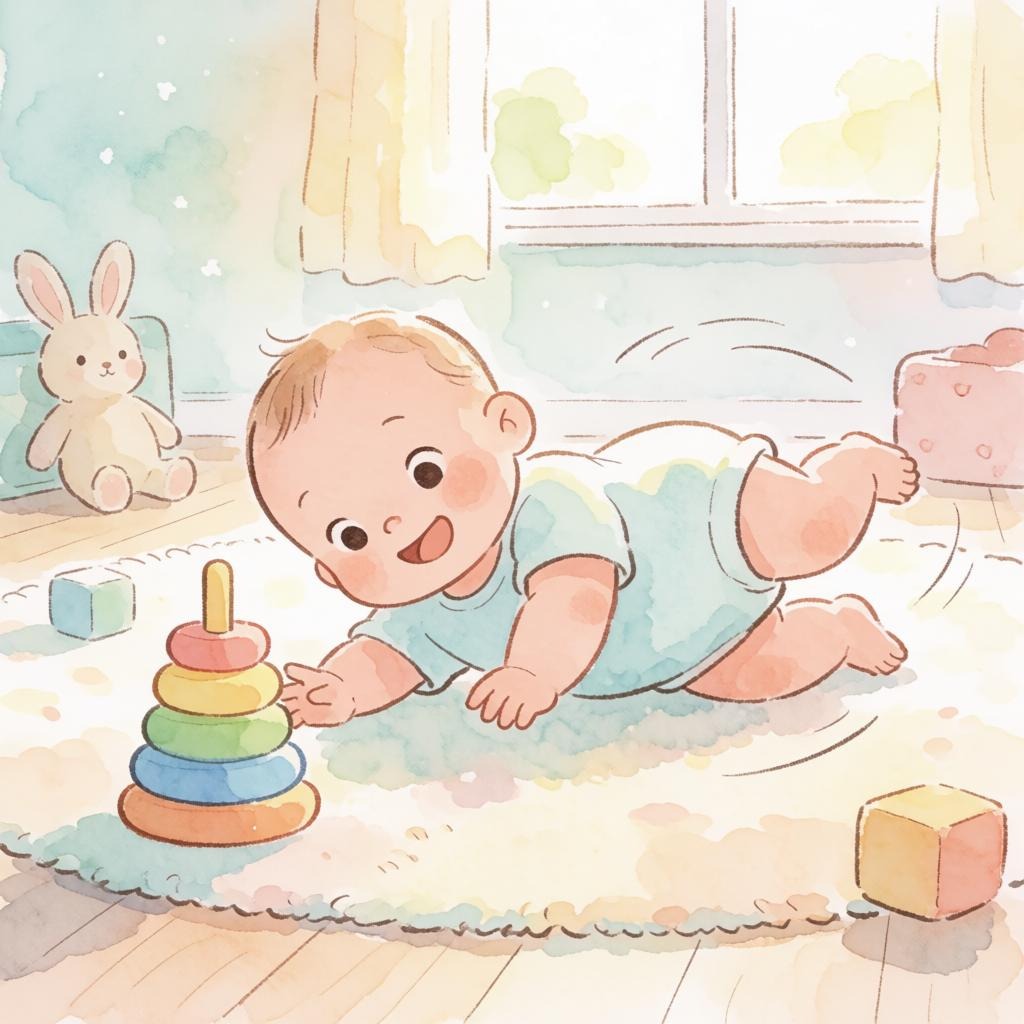
Many parents are concerned about whether their little one is meeting their developmental milestones. Rolling is one of the first major milestones to accomplish and so it can be significant.
Breaking down the roll
Let's break down rolling. There are two ways to roll either from tummy to back or back to tummy. Though babies tend to roll from tummy to back first. This is not a given. To achieve a roll, a baby needs to be able to rotate their entire body into a new position. As they become better at rolling, this movement becomes more coordinated and they can separate the rotation of the arms to the rotation of the legs. There are a few muscle groups that are more involved with rolling. They include abdominals, back muscles (erector spinae), quadriceps, and hamstrings.
When a baby first learns to roll the muscles that are more involved are the abdominal muscles and back muscles. These are the muscles which drive the movement. As a baby becomes more confident the power of the movement tends to come from the legs (hamstrings, quadriceps). The important thing to be aware of is the arm plays an important role of reaching across the body to start a roll from back to tummy. And when rolling from tummy to back, the neck and the same back muscles (erector spinae) tend to start the movement. This supports the idea that a baby learns to roll because they want something. When they are on their tummy, they look at something till their heavy head becomes imbalanced. When they are on their back they reach for something till their momentum turns them over.
What if my child is struggling to roll?
So what does this mean if our child is struggling to roll? Knowing what is involved in rolling can help guide us in how to break down the movement for our little ones. This involves three things. Firstly motivation, second gravity and finally strength and control.
Motivation
A child will not roll if they aren't motivated. Helping your child be interested and engage in toys and moving them strategically to help your child to become off balanced is key. This means when on the tummy, moving the toys to the side and up to encourage the head to tilt and look up. This drives the roll. On the back, it is encouraging their arm to reach across the body. Across the body is key. If they are reaching for something that is on the same side as their arm, they won't roll. If you slowly move the object over them and onto the other side, they will be motivated to keep reaching with that arm and reaching across the body, this drives the roll.
Gravity
Gravity is the next step. They need to be in an off balanced position. Sometimes, positioning them so they are almost unstable can help them be more successful at rolling. This is where side lying comes in. It can bring them closer to this off balanced position so they are more likely to become successful. As they get better, you begin to reduce how much you help and they become less reliant on a side-lying position.
Strength and control
Finally, looking at strength and control. Generally, the tummy and back muscles are the initial drivers. You can help your child build strength in these muscles by the following activities. To build strength in back muscles, tummy time is key. Lifting their head up works those back and neck muscles like a treat. Abdominal muscles are best strengthened on the back. Lifting legs into the air, reaching for knees or toes is a fantastic way to build abdominal strength in babies. The next thing is leg strength as the quadriceps and hamstrings are the other main muscle group for rolling. The best way to help these muscles to become involved is showing your child how to push off the ground to roll over. So, on the tummy, help them get their foot flat and hold it in this position, they will eventually push into their foot and roll themselves over. This teaches them what is possible. On the back, bend and then cross their leg over their other leg. They will eventually kick out with their leg and the momentum will roll them over. Both of these situations involve setting them up appropriately and then waiting for them to do the movement. Learning occurs when they are active in the process. As they start to have success, you can reduce how much help you are giving them and they will become more independent in the skill.
Happy rolling
Remember with all skills, breaking down the movement into steps and making sure that the motivation to complete the movement becomes the driving factor. This is key for skill acquisition in babies. Though you can help them learn the skill, you can't do the whole thing for them otherwise they won't learn it. Show them the process, but leave the last few steps for them to complete themselves, this keeps them active in the process. As they get success, you can start to reduce your support. Happy rolling.
You might also like
When should my child start walking?
When should my child start walking? A paediatric physiotherapist explains the 12-18 month window, the four things first steps need, and when to seek an assessment.
Oh no! My toddler has flat feet
Are flat feet normal in toddlers? A paediatric physiotherapist explains the fat pad that hides the arch, a simple tip-toe check to try at home, and when to seek assessment.

How late can walking be and still be normal?
Your baby is a year old and not walking. How late can walking be and still be normal? Plain numbers on bum shuffling and corrected age for prems.